
“Walk with the wise and become wise; associate with fools and get in trouble.” Proverbs 13:8 (NLT)
What You Stay Around Starts to Feel Normal
Have you ever felt guilty for wanting more from someone — after you’d already shared with them what you needed, given them grace, already made room for their limits, and then consequentially already told yourself not to expect too much? If you’ve started to wonder whether that guilt is actually wisdom trying to get your attention, this one’s for you.
I used to think mediocrity was something you fell into. Now I think it’s something you catch.
Not from people who are struggling and trying, but from people who’ve decided not to try and have made peace with it. Then they’ll expect you to extend them grace for it. But it’s not the kind of grace that meets someone honestly during a hard season. It’s the kind that’s really asking you to ignore the pattern.
That’s different from someone having a bad habit and working to improve it. A pattern someone defends is something they’ve decided is the standard.
The First Reaction Isn’t the Whole Story
I’ve learned to pay attention not to whether someone falls short because everyone does, but to what happens when you gently point out the pattern.
Someone who’s genuinely trying, even when limited by genuine circumstances, may initially feel hurt or become defensive when you say, “I need more from you.” They may speak honestly about what’s hard for them right now. But they won’t stay defensive.
Why? Because we all get defensive sometimes. That’s human. What matters is whether someone takes the time to actually sit with what was said or digs in and stays there — and whether that, too, becomes a pattern.

Proverbs 12:15 (AMP) puts it plainly: “The way of a [self-confident] fool is right in his own eyes, but a wise man is he who listens to counsel.”
Someone who’s settled into mediocrity as an identity treats the observation itself as the offense. To them, the problem isn’t the pattern — it’s that you noticed and pointed it out. Their demand for grace then becomes a shield against accountability rather than something offered in response to genuine effort.
And sometimes what looks like someone defending their mediocrity goes even deeper: they’re lying to themselves about who they really are. That could be for many reasons. I think that some people are really scared to take a good look at themselves. When we do that, what we see might be ugly. It might not match the perfect image we had of ourselves. When someone is committed to protecting that perfect image, anything that challenges it won’t be received well. Your words can’t reach them because you’re being dismissed. Underneath that dismissal, your words are being filtered through a story they’ve told themselves — one that doesn’t have room for what you just said.
I’m not saying that to be harsh. I say it because I spent too long confusing the two, and it has cost me a lot—including time I can never get back.
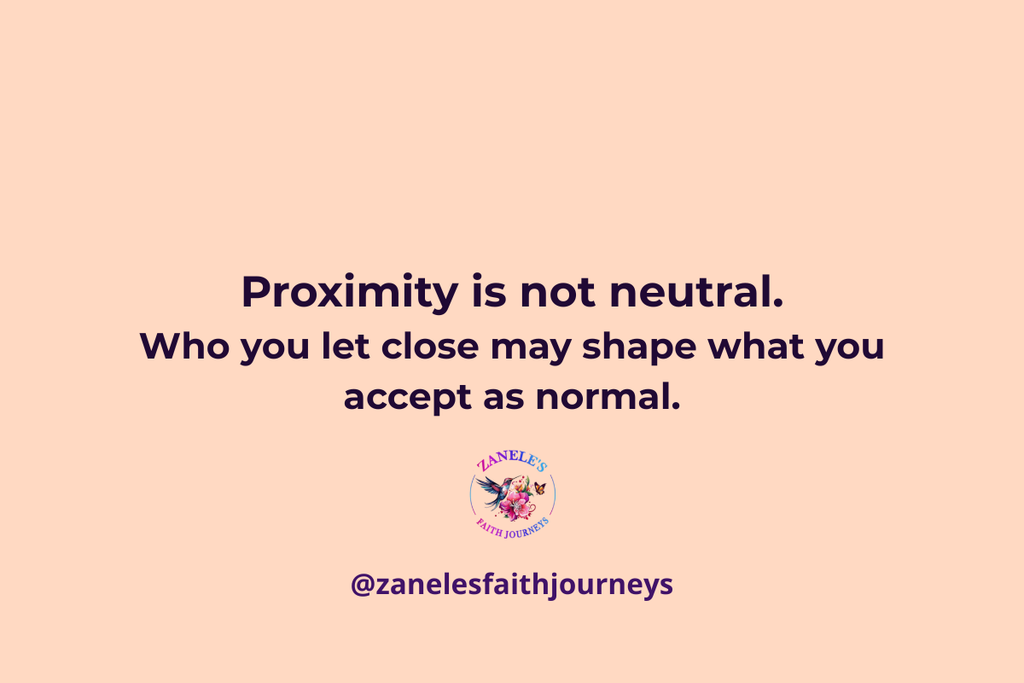
Proximity Is Not Neutral
The Word of God says it plainly in Proverbs 13:20 (AMP): “He who walks [as a companion] with wise men will be wise, but the companion of [conceited, dull-witted] fools [are fools themselves and] will experience harm.”
That’s not a verse about avoiding “bad people.” It’s a verse about discernment and proximity. Who you let close shapes your resting state — your baseline for what’s normal, what’s acceptable, what you’ll settle for — whether you notice it happening or not.
It took me the longest time to realize that when someone is defending their mediocrity, your effort can make their lack of effort visible by comparison. Over time, that contrast may become uncomfortable for you. You begin to see how much effort you’re supplying, how little responsibility the other person is taking, and how much of the gap you’ve been trying to close on your own. The pressure may be subtle, but its effect isn’t neutral. And if preserving the relationship requires you to play small, lower your standards, or slowly disappear to keep the peace, that proximity is not neutral. What looks like closeness can become an invitation to lower your own bar.
Choose Carefully. Practice Wisdom Where You Can’t Choose.
I’m learning to take two different approaches because not every relationship in my life is optional.
For the people I do choose — friends, partners, and anyone I let into the center of my life — the bar is high. I’m not talking about perfection, but real effort, real reciprocity, and a real willingness to hear “I need more” without treating it as a personal attack.
For the people I can’t simply leave—family, coworkers, and neighbors—I’m learning mindfulness rather than automatic avoidance. This doesn’t mean avoidance is never necessary, because my peace matters too. I’m staying conscious of when I’m shrinking to keep the peace or absorbing someone else’s resting state as my own. I’m also learning to keep enough distance so that their ceiling doesn’t quietly become mine.
That distinction matters because this isn’t a call to isolate yourself from anyone who isn’t already where you are. It’s a call to know the difference between someone stretching toward more and someone asking you to stop expecting it.
(And if you’re sitting there wondering whether someone’s pattern is a choice or an actual limit — whether they’re defending mediocrity or just doing what they truly have capacity for — that’s a harder question, and one worth its own conversation. I’ll come back to it in a future post.)
Life is a faith journey. Walk boldly.
💜 Be Honest — about what your closest relationships are cultivating in you.
💜 Be Discerning — about the difference between grace and permission.
💜 Be Intentional — about who gets access to the center of your life.
If you’ve been quietly lowering your own bar to keep the peace with someone else’s low standards, I hope this gave you language for what’s actually happening — and permission to want more without guilt.
If this post resonated with you, I’d love for you to stick around. Every Wednesday, I share what I’m walking through in real time — the messy middle, the faith steps, the moments I’m still figuring out as I go. Subscribe below and let’s keep walking this out together.
— Tami Zanele