
“Do all that you can to live in peace with everyone.” — Romans 12:18 (NLT)
Learning to Receive What You’re Quick to Deflect
The Lord gave me this theme verse again this week, but in a slightly different context. It’s all about how we give and receive gratitude. I was recently triggered when I expressed sincere gratitude after a friend did something meaningful for me. She responded, ” No thanks needed. I was thinking, what makes you think you can tell me that no thanks are needed? Only I can determine that.
How many times has someone thanked you for something and you immediately responded:
“No thanks necessary.”
“You don’t have to thank me.”
“It was nothing.”
We often say these things without even thinking about them. Most of us are trying to be humble, and some of us really think that because of who a person is and what they mean to you, thanks are not needed. Maybe we don’t want the other person to feel indebted to us. Or maybe receiving gratitude makes us a little uncomfortable.
But I’ve been thinking about this differently lately.
I want to encourage you to stop saying, “No thanks necessary.”
Sometimes it’s necessary to express your gratitude.
And believe it or not, maybe it’s just as necessary for you to hear someone else’s gratitude and receive it.
There’s something so beautiful and meaningful about another person sharing, What you did mattered to me. What you said mattered to me.
That’s what a sincere thank-you really is.
It’s an acknowledgment that something you did made a difference in another person’s life—even if only for a moment.
So be gracious enough to receive it.
You don’t need to make a speech or make the moment bigger than it is.
“You’re welcome.”
“I’m glad I could help.”
“I appreciate you saying that,” or even a simple, “No problem.”
Just receive the gratitude they expressed.
But this isn’t only about learning how to say thank you or how to receive thanks.
It’s also about what happens when people don’t respond the way we expected them to—and how quickly we can surrender our peace trying to figure out why.
That quiet reaction of mine — the “who are you to tell me thanks isn’t needed” — stuck with me. But it wasn’t the only time gratitude got complicated between me and someone I loved.
But Sometimes People Won’t Receive Your Gratitude
I learned this lesson the hard way.
Years ago, another good friend did something for me that meant the world. I was overwhelmed with gratitude and wanted to send her a thank-you card, so I called or texted her (I don’t remember which) to ask for her address.

She wouldn’t give it to me.
I was disappointed.
Actually, I was more than disappointed.
I was hurt and angry.
I couldn’t understand why she wouldn’t give me her address. I started wondering whether she simply didn’t want me to have it. Maybe she didn’t trust me with it. Maybe there was something else going on that I didn’t understand.
And because I was hurt, I lashed out.
I damaged the relationship as a result.
Looking back, I understand something that I didn’t understand then:
There was no reason for me to take her decision personally.
Whatever her reason for not giving me her address was, it was hers.
I should have never made it about me.
Don’t Fill in the Blanks
This is where I got myself into trouble.
I knew what she did. She refused to give me her address.
What I didn’t know was why.
And instead of leaving that blank empty, I filled it in myself.
How often do we do that?
When someone doesn’t respond the way we expect, we try to understand why; someone doesn’t call, we decide what that means; someone says no, we decide what they must think of us; or when someone behaves in a way we don’t understand, and before long we have written an entire story explaining their motives.
Then we respond to the story we created.
And as a result, we get hurt, angry, offended, or defensive.
Sometimes we confront someone over something they never actually said. We pull away, lash out, and damage a relationship (over an explanation we created) because we couldn’t tolerate not knowing.
That’s what I did.
That’s why one of the biggest lessons I took from this experience is simple:
Don’t take anything personally.
Of course that doesn’t mean people will never do things that feel personal. It also doesn’t mean you should ignore hurtful behavior or refuse to address something that needs addressing.
It means you don’t have to make someone else’s behavior about you when you don’t actually know that it is.
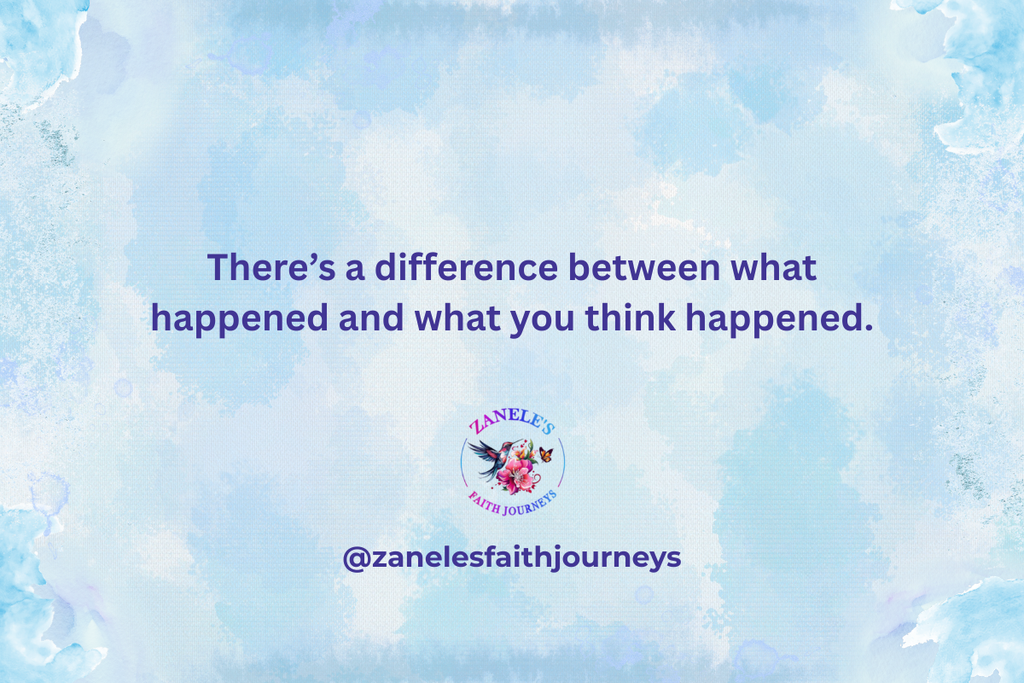
There’s a difference between what happened and what you think happened.
The only thing I knew for sure was that my friend wouldn’t give me her address.
That was the only fact.
Anything else I thought about her refusal was my interpretation.
I wish I had understood the difference then.
Her refusal was hers, and my response was mine.
I couldn’t control what she did, but I could’ve controlled what I did next.
And I didn’t handle that well.
Even now, all these years later, I still regret it. That friend was there for me during a particularly difficult summer when we were young. I will never forget it.
Eventually, long after I learned the lesson I’m sharing with you here, I apologized for the time I lashed out at her, and she accepted my apology. But our relationship hasn’t been the same — an unfortunate consequence of that lash-out moment.
When You Don’t Understand Someone’s Response
Maybe you know this feeling.
You said something with good intentions and received a response you weren’t expecting.
A friend declined an invitation, didn’t return your call, or their response seemed unusually short. Maybe a new boundary was established that you didn’t understand.
And now your mind wants an explanation. But before you give it one… stop and ask yourself:
What do I actually know?
And then:
What have I assumed?
Those two questions could have changed the way I handled the situation with my friend.
I didn’t have to understand her decision to respect it.
And I didn’t have to invent an explanation just because I didn’t have one.
Sometimes You Need to Let It Be
There is another lesson here.
If you express gratitude to someone and they respond, “No thanks needed,” sometimes you simply have to let it be.
You expressed your gratitude.
They heard you.
You don’t have to convince them to receive it differently.
Let it be.

And looking back at what happened with my friend, I could have done the same thing.
She wouldn’t give me her address. And that was okay.
Let it be.
I could have waited until the next time I saw her and said, “I really want you to know how much what you did meant to me. Thank you.”
There would have been no need for an address, card, or explanation.
And even if I never got that opportunity?
I still had somewhere to take all that gratitude.
Give Gratitude to God
Maybe you’ve been here too — grateful, but with nowhere to put it. If you find yourself in this position, do differently than I did.
Now, I would pray and give that gratitude to God — the gratitude I couldn’t give directly.

“Thank You, Lord, for creating such a generous person. I am so grateful to You, Lord.”
That doesn’t make my gratitude any less real.
I don’t need my friend to receive that card for me to be grateful.
I don’t need her to respond (the way I want her to) for what she did to still matter.
And I don’t need to understand her decision to respect it.
Gratitude then becomes worship.
Lord, thank You for putting that person in my path.
Thank You for what they did for me.
Thank You for allowing me to experience their kindness.
And then?
Let it be.
Receiving Is Part of Giving
I believe many of us are comfortable being the giver because we all want to help, encourage, show up, and pray.
And then once we help someone with what they need, we quickly wave away any acknowledgment of what we’ve done.
“No thanks necessary.”
But maybe learning to receive is part of becoming more gracious, too.
When someone thanks you, you don’t have to diminish what you did to prove that you did it from a good heart.
Receiving their gratitude doesn’t mean you helped them because you wanted recognition.
It simply means you are allowing them to tell you:
You mattered to me in that moment.
There’s grace in giving and receiving, and there’s also grace in knowing when to let something go.
Do All That You Can
Last week, I used Romans 12:18:
“Do all that you can to live in peace with everyone.”
And here I am again with the same scripture with a different perspective.
This time, I’m thinking about the responsibility contained in those words:
Do all that YOU can.
We can’t control someone else’s response, whether someone receives our gratitude, whether someone gives us the explanation we want, or someone’s boundaries, comfort level, choices, or behavior.
But we are responsible for our own.
We’re responsible for whether we choose to take someone else’s decision personally or react out of hurt.
We’re also responsible for creating motives for people when we don’t actually know their motives.
We’re responsible for what we do next.
So the next time someone responds in a way you don’t understand, maybe you don’t need to spend the rest of the day—or the next three days—trying to figure them out.
Separate what you know from what you’ve assumed and respect what belongs to them.
And when there is nothing more for you to do?
Let it be.
Sometimes living in peace with people means saying thank you.
Sometimes it means graciously receiving a thank-you.
Sometimes it means respecting a boundary you don’t understand.
Sometimes it means admitting, I handled that badly.
Sometimes it means waiting for another opportunity.
Sometimes it means taking your gratitude directly to God.
And sometimes it simply means leaving another person’s “why” with them.
I wish I had understood some of these things when I was younger.
But that’s the thing about a faith journey.
Some lessons are learned while we’re walking.
Some are learned after we’ve stumbled.
And some of the lessons you seem to have to get repeated until you learn them.
And some are learned when we look back at a situation we once thought was about somebody else and finally recognize what God was showing us about ourselves.
Life is a faith journey. Walk boldly.
💜 Be willing to receive gratitude without deflecting it.
💜 Be careful not to fill in blanks that belong to someone else.
💜 Be at peace with the “why” you may never get.
If this spoke to something you’ve been carrying — a relationship, a response you couldn’t understand, or your own habit of waving away thanks — I’d love for you to walk this journey with me. Subscribe below and get each new post delivered straight to your inbox, so you never miss a moment of encouragement along the way.
— Tami Zanele