When “Lazy” Hit a Nerve
Two weeks ago, while I was talking to my brother on the phone, he joked that I was lazy.
It stung immediately.
I didn’t say anything—I just kept the conversation going. He was waiting at a restaurant, so when his friend arrived, he had to end the call abruptly.
But afterward, I was still bothered.
So I texted him shortly after the call ended: BTW…I am NOT lazy.
And then something unexpected happened.
After the sting settled, instead of just sitting in the hurt, I started pulling a thread backward. All the way to January 2020, when I was visiting my brother at his home in South Carolina.
I couldn’t seem to get enough sleep. I couldn’t get up early for anything.
I was just tired—deeply, quietly, unremarkably tired.
And at the time, I thought nothing of it.
I told myself it was because of all the overtime I’d been working.
Tired Was My Baseline
That January, I was working full-time—12-hour night shifts—and preparing to start my last semester of college. It was winter break, and I was picking up a lot of overtime.
I was tired. A lot.
But it didn’t feel like a warning sign.
It just felt like a regular Tuesday to me.
That’s the thing about burnout that nobody tells you: it doesn’t always arrive with fanfare. It doesn’t tap you on the shoulder and say, Hey, something’s wrong.
It just quietly moves in… and redefines your normal.
The exhaustion becomes familiar. Expected. Easy to dismiss.
You stop noticing it—because you’re living in it.
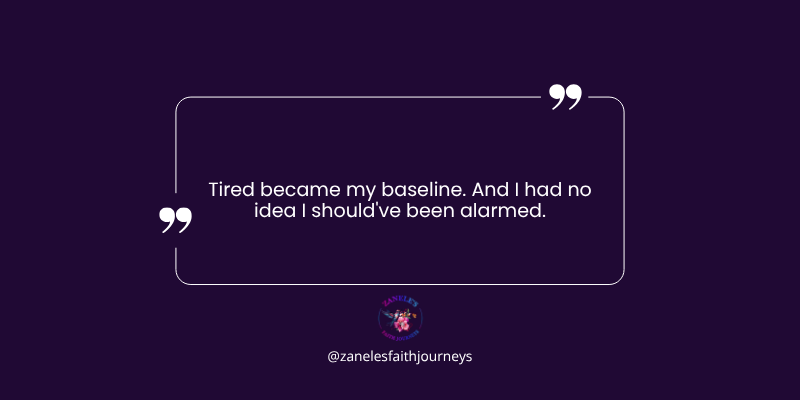
Tired became my baseline.
And I had no idea I should’ve been alarmed.
Four months after that visit to South Carolina, the world fell apart. COVID-19 arrived, and I continued to show up to work at the hospital just like I always did—because that’s what you do when you’re a healthcare worker, and people need care.
It was business as usual for me.
I won’t say much more about that season. You lived through 2020, too. You remember.
But I will say this:
I was already running on fumes before any of that began.

Finally, A Name
It wasn’t until 2023 that I received an official burnout diagnosis from my therapist.
By then, I had been doing what I’d always done—pushing through, showing up, functioning.
But my brain was fried.
I was still running on fumes—the same fumes I’d been running on since 2020… before the visit to South Carolina, before the pandemic, before any of it had a name.
Before I got that diagnosis, I genuinely thought I was having a nervous breakdown.
That’s what it felt like from the inside—not like exhaustion, but like something in me was coming apart.
Giving it a name didn’t erase the frustration or the inner turmoil.
If anything, it brought two things at once: relief… and grief.
Relief, because I finally had language for something I had been carrying without words.
Relief, because I wasn’t imagining it.
But also grief.
Grief for how long I had been living this way—quietly, alone, without understanding what was happening to me.
My brother didn’t know what I was going through then.
And honestly? Neither did I.
No one had the full picture—including me.
That doesn’t excuse the joke.
But it does soften the edge.
He was working with incomplete information.
And so was I.
What I Got Wrong About Recovery
Nothing really changed for me after I got the official diagnosis.
I was still doing what I had always done. Still pushing and adding things to an already heavy load.
But that didn’t last long.
In late 2023, I was so overwhelmed, I filed for FMLA from my job—and for the first time, I tried to do things differently.
I did what made sense.
I rested.
I gave myself grace.
I even shared that season with you in a few of my blogs—most recently in Blog #45. It was my honest reckoning, right in the middle of burnout, when I could no longer pretend I was fine.
But here’s what I’ve come to understand since then:
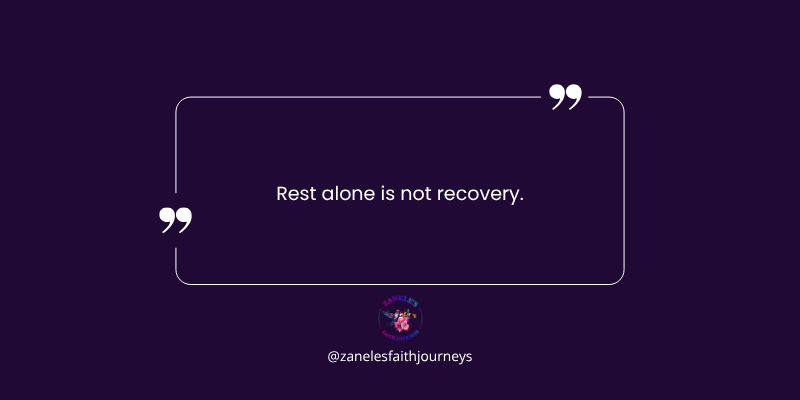
Rest alone is not recovery.
I thought if I just waited long enough, I would feel better.
I thought my body would eventually catch up.
And if I’m being honest… I expected that by now—more than two and a half years later—I’d be on the other side of this.
But I’m not.
And sitting with that truth is its own special kind of grief.
I thought I’d feel better by now.
I really did.
But during a recent appointment, my therapist helped me understand something I hadn’t fully grasped before:
Burnout recovery isn’t passive.
It’s not something that just happens while you rest.
It requires you to show up for yourself—deliberately, consistently… even on the days when showing up feels like too much.
And that shift in understanding?
It’s changing everything.
The Messy Middle
I want to be honest about what this looks like in my actual life—not in theory, but in practice.
Because this is the messy middle.
And the messy middle is my life right now.
(Truthfully, my blog, Zanele’s Faith Journeys, has always been about the messy middles of my life.)
It looks like prayer and Scripture.
Psalm 91 has been on replay (like a favorite song) for three years now. I read it back-to-back, over and over, as many times as I need.
It has become a kind of covering for me—a security blanket when everything else feels uncertain.
And lately, that uncertainty has been often.
Faith is not passive in my recovery.
It is the foundation I am rebuilding from.
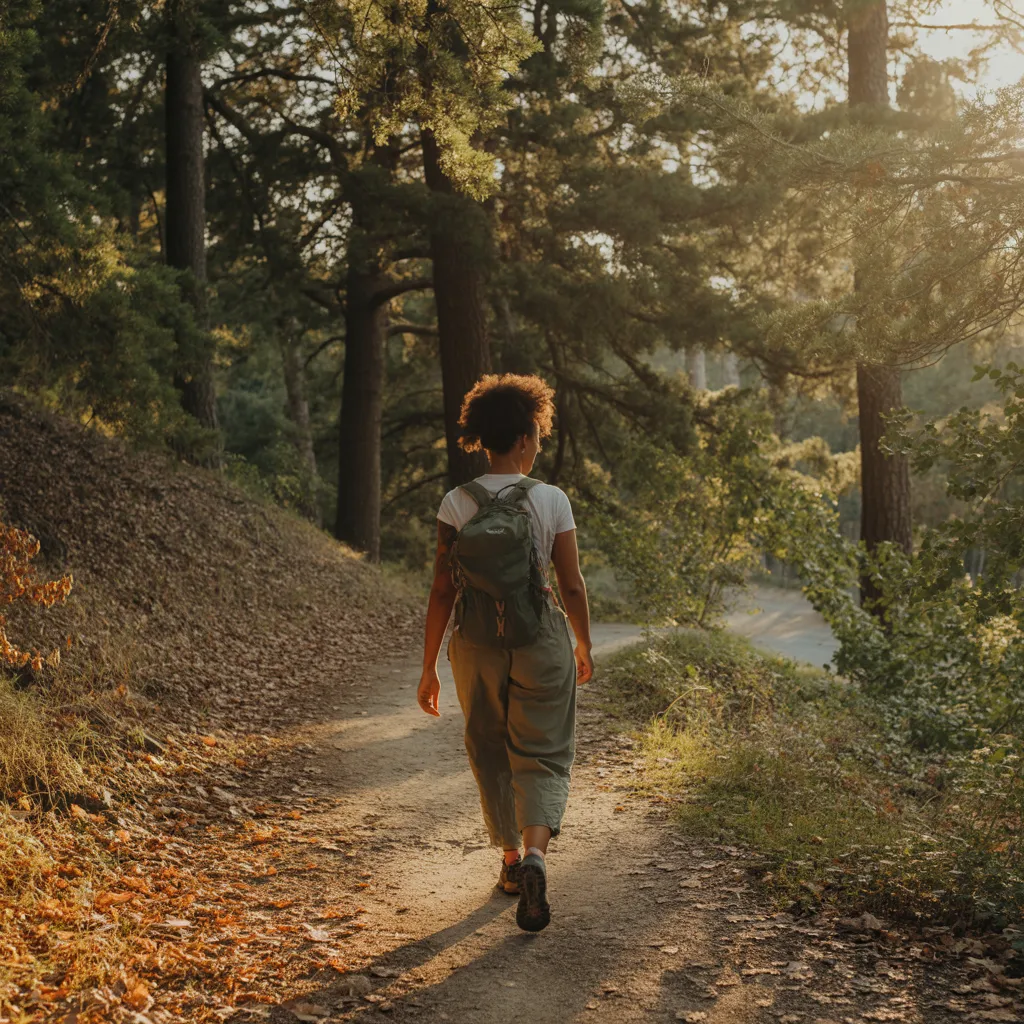
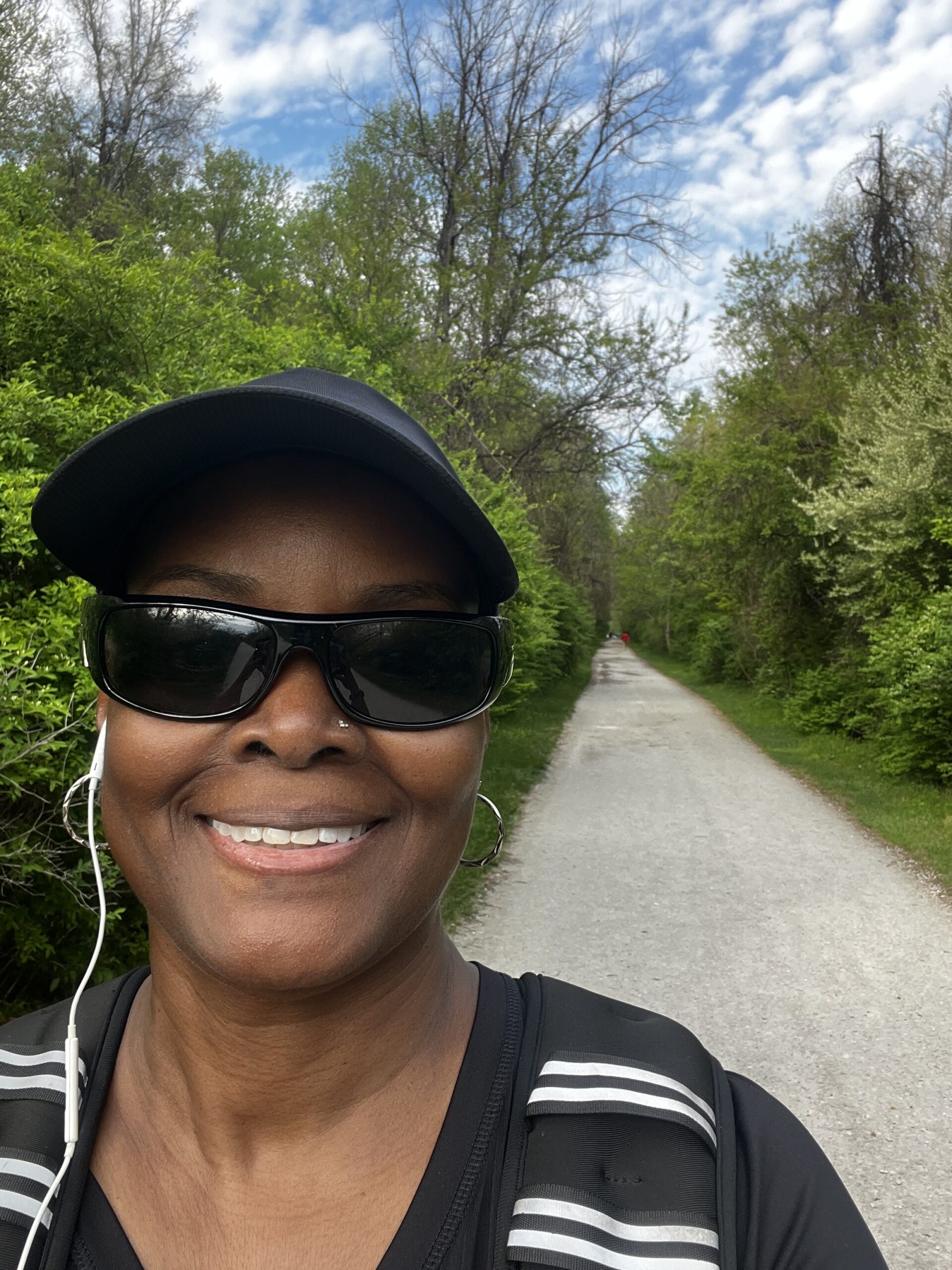
It looks like getting back on the nature trail.
Last week, I walked two three-mile walks—the first time I had been on that trail since January.
That first walk was hard.
But both of them were good.
Walking in creation does something for me that nothing else quite can—it lowers the noise, settles my nervous system, and reminds me that the world is still moving…
…and that I am still in it.
It looks like EFT tapping.
If you’re not familiar, Emotional Freedom Technique involves gently tapping on specific acupressure points while working through a stress, emotion, or belief. It draws on Traditional Chinese Medicine and modern psychology, helping the nervous system process what the mind carries.
This was actually suggested by my therapist.
I was skeptical at first.
But I’ve found it genuinely helpful in ways I didn’t expect.
It has become a real part of how I’m working through this season.
If you’re curious, keep an open mind and look into it. It may or may not be for you—but it’s worth exploring.
It also looks like therapy.
Having a space where I can process this honestly—with guidance, support, and truth—has been an essential part of my recovery.
This is not something I am figuring out alone.
It looks like naturopathic care—working with a practitioner who sees me as a whole person and is helping me address what burnout has done to my body on a deeper level.
It looks like prioritizing quality sleep.
That sounds simple.
It isn’t.
Sleep is not a luxury in burnout recovery—it is part of the work.
Getting consistent, restorative sleep is something I am actively tending to.
And it looks like going back to the gym.
This week, I’m returning to strength training—committing to at least eight weeks. Hopefully more.
Right now, I know myself well enough to be honest:
I’m not disciplined enough to work out at home.
So I made a financial commitment.
Because when I invest the money, I show up.
That’s not a character flaw.
That’s self-awareness.
Paying for the gym isn’t an extravagance—
It’s an investment in my recovery.
And I also have a coach there keeping an eye on me, making sure I’m executing each lift correctly and not doing too much too soon. When you’re adding heavy plates to a bar, that matters.
After eight weeks of showing up in that space, I’ll be just as committed to strength training at home.
Because there is something deeply meaningful to me about a woman in burnout recovery rebuilding her strength—
Physically. Mentally. Spiritually.
Bar by bar.
Deadlift. Squat. Press. Bench.
Week by week.
Jesus in the Middle of It All
There is one more thing I need to say—because it’s not separate from any of this.
It’s central to all of it.
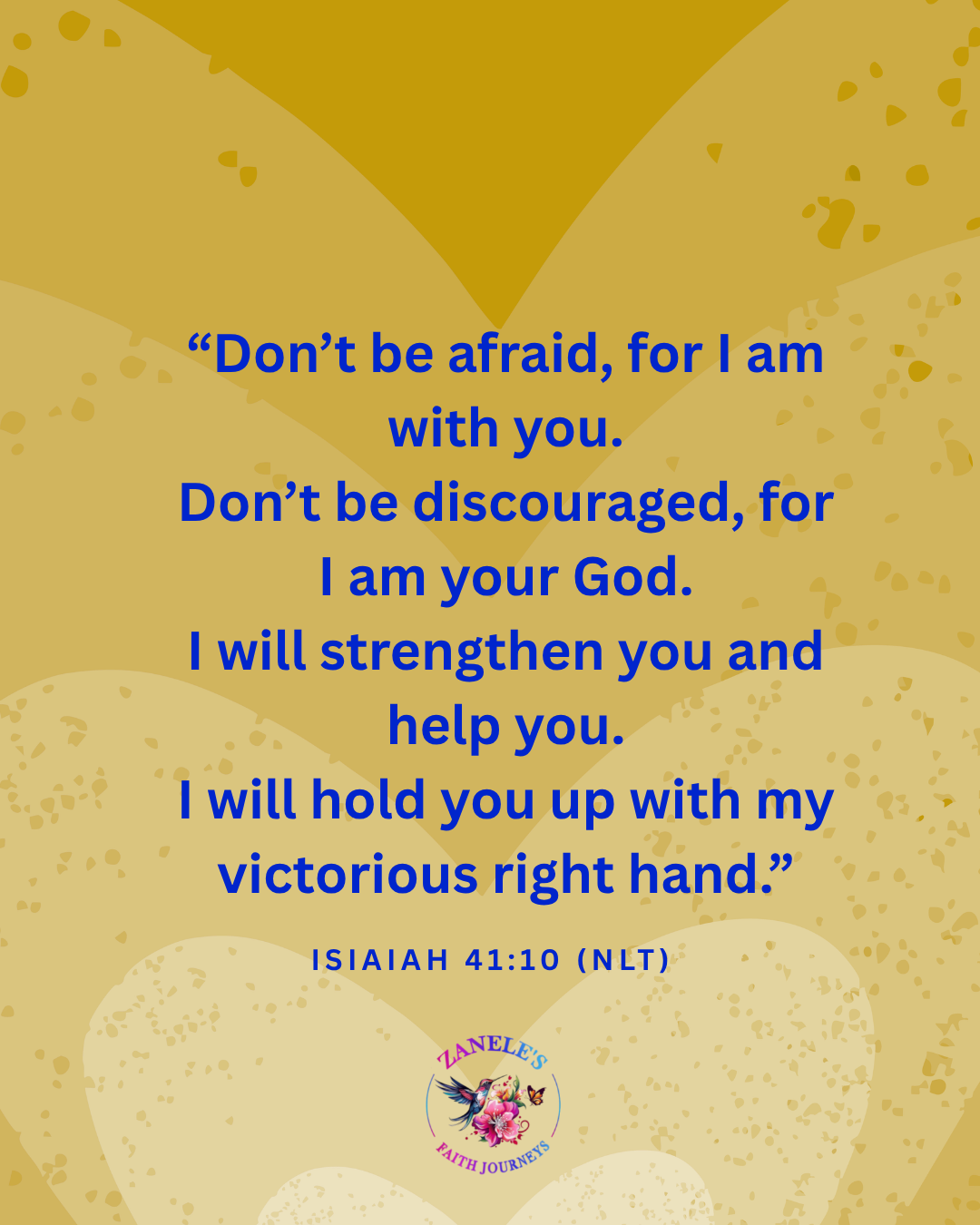
I am actively including Jesus in my recovery.
Not just during prayer time.
But in everything.
On the nature trail.
At the gym.
During EFT.
In my therapy sessions.
Before I go to sleep… and when I wake up in the morning.
He is not separate from this process.
He is in it with me.
In the exhaustion.
In the rebuilding.
In the days that feel hopeful… and the ones that don’t.
I am not walking through burnout recovery alone.
Still Tired. Still Moving.
I want to be clear with you:
I am still tired.
This is not a triumphant announcement that I’ve arrived somewhere.
It’s an honest update—from someone still in the middle of the journey.
But I am not the same woman who sat in South Carolina in January 2020, unaware that her body was already sending signals she didn’t know how to read.
I have language now.
I have tools.
I have a faith that has been tested—and has held.
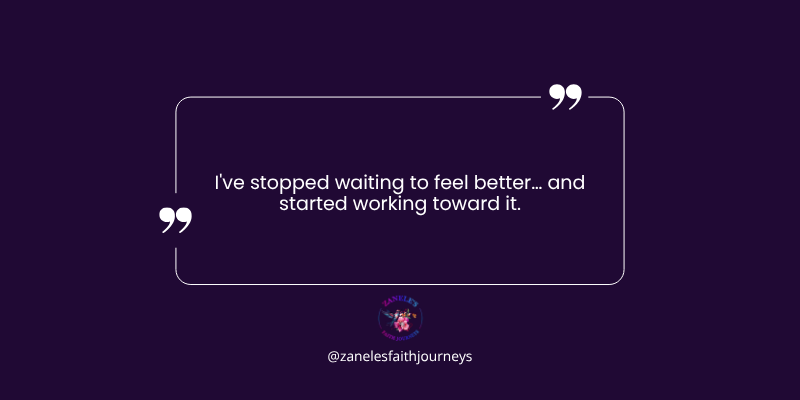
And I’ve stopped waiting to feel better…
…and started working toward it.
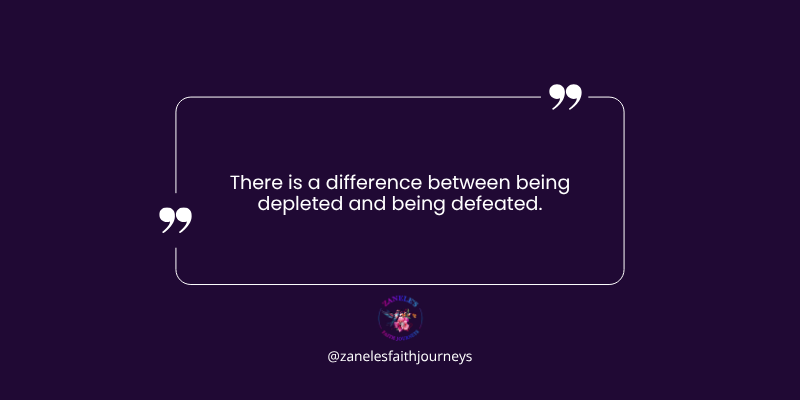
There is a difference between being depleted and being defeated.
I am depleted.
But I am not defeated.
“But those who wait for the Lord [who expect, look for, and hope in Him] will gain new strength and renew their power; they will lift up their wings [and rise up close to God] like eagles [rising toward the sun]; they will run and not become weary, they will walk and not grow tired.”
— Isaiah 40:31
I’m still in the waiting.
But I’m learning that waiting isn’t idle.
God is doing something.
And so am I.
Before You Go
If you’re somewhere in your own tired season, sit with these questions:
Has chronic exhaustion become so normal for you that you don’t realize it might be trying to tell you something?
And if rest alone hasn’t been enough… what might that be trying to tell you?
Be brave enough to tell the truth about where you are. 💜
Be faithful enough to keep showing up anyway. 💜
Be kind enough to stop calling your exhaustion a character flaw. 💜
You are not lazy.
You are human.
And you are held by God.
— Tami Zanele