From Understanding to Action – What Your Body Needs Now

Last week, I talked about the “why” behind the anxiety, overwhelm, and sleep struggles that so many of us experience during peri-menopause and menopause. We discovered that our nervous systems are simply recalibrating without the hormonal stabilizers we once relied on—primarily estrogen and progesterone, which acted as our body’s natural anxiety and stress management system. Understanding that is the first step toward healing.
Understanding is a good start, but that’s not enough, is it? We need more help by exploring practical tools or ways to support our changing bodies that actually work in real life, not just in theory. The beautiful truth is that God hasn’t left us to figure this out on our own. He’s equipped us with everything we need not just to survive this season of our lives, but to thrive in it.
So let’s look into some things in God’s toolkit for nervous system healing. These aren’t just wellness trends or nice ideas; they’re science-backed practices that can work with the intricate design He’s built into our bodies.
Philippians 4:19 promises us, “And my God will liberally supply (fill until full) your every need according to His riches in glory in Christ Jesus.” But first, you have to go to Him in prayer with an open heart. Whatever you’re carrying today, know you can bring it to God. He truly cares about every detail; nothing is too small or too big for our Abba Father.
When I was struggling in 2023, I started looking for ways to feel better. I not only leaned on the Lord but also began looking into podcasts with people who had expertise in all things menopause. What I discovered helped me tremendously, and I’m glad to share some of the tools I found with you.
Moving Mountains (and Anxiety) One Step at a Time
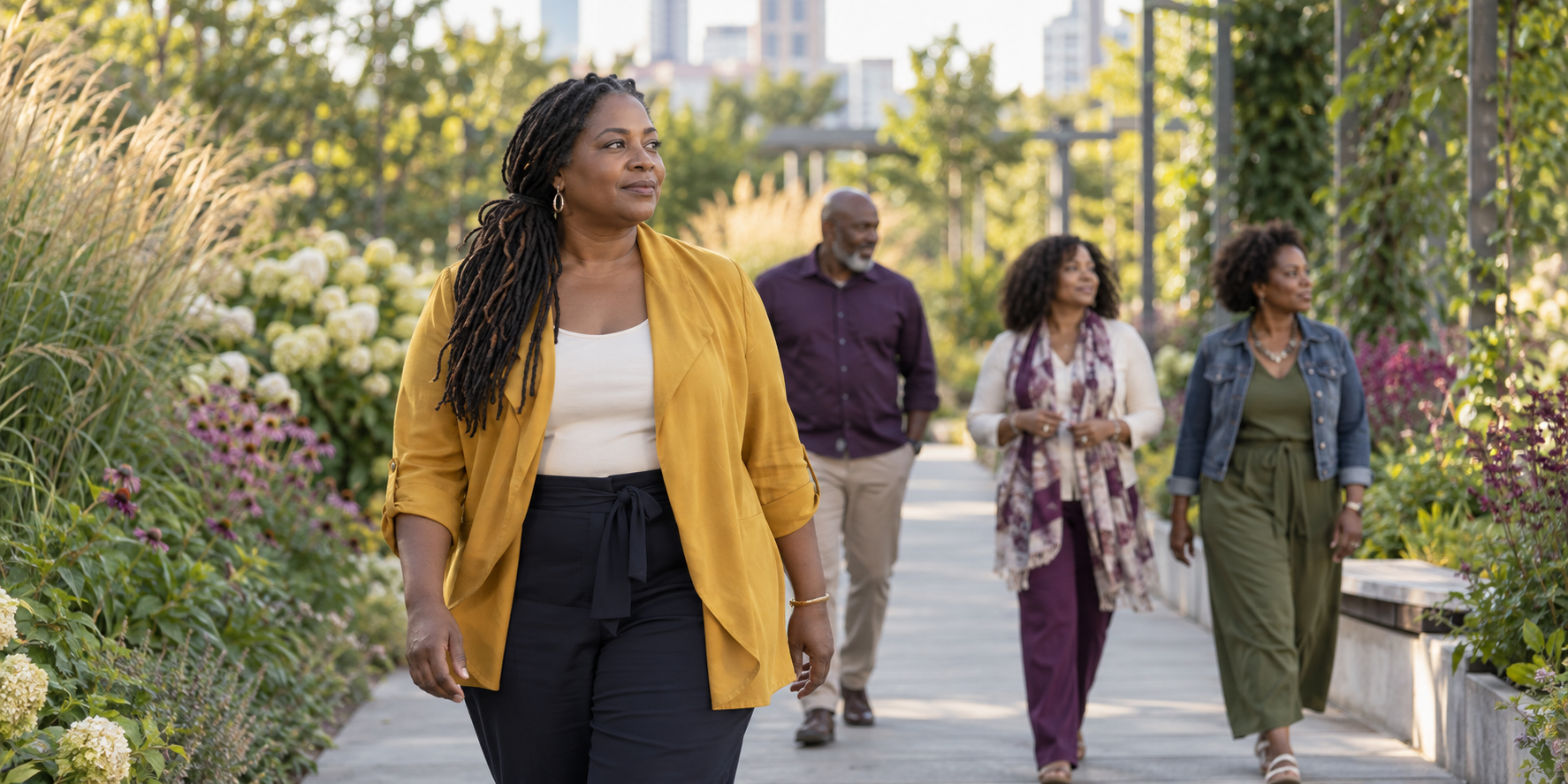
There’s something profoundly healing about putting one foot in front of the other. It doesn’t seem like it’s all that, but walking is perhaps the most underrated medicine we have, especially for women navigating the hormonal changes of midlife.
When anxiety comes and your nervous system feels like it’s stuck in overdrive, walking shifts you from that frantic “fight or flight” mode into something calmer. The rhythm of your steps becomes a meditation in motion, a gentle way to tell your body, “We’re safe. We can slow down now.” And if you’re mindfully spending that walk time talking to God, that’s a game-changer. It has been for me!
Walking is particularly powerful for women during hormonal transitions because it helps regulate cortisol without overstressing our already-challenged systems.
Here’s what walking does for your nervous system:
- It activates your parasympathetic nervous system (remember our “rest and digest” friend from last week?)
- It helps process stress hormones like cortisol that get stuck in our system
- It improves sleep quality by regulating our circadian rhythms
- It releases endorphins—God’s natural mood elevators
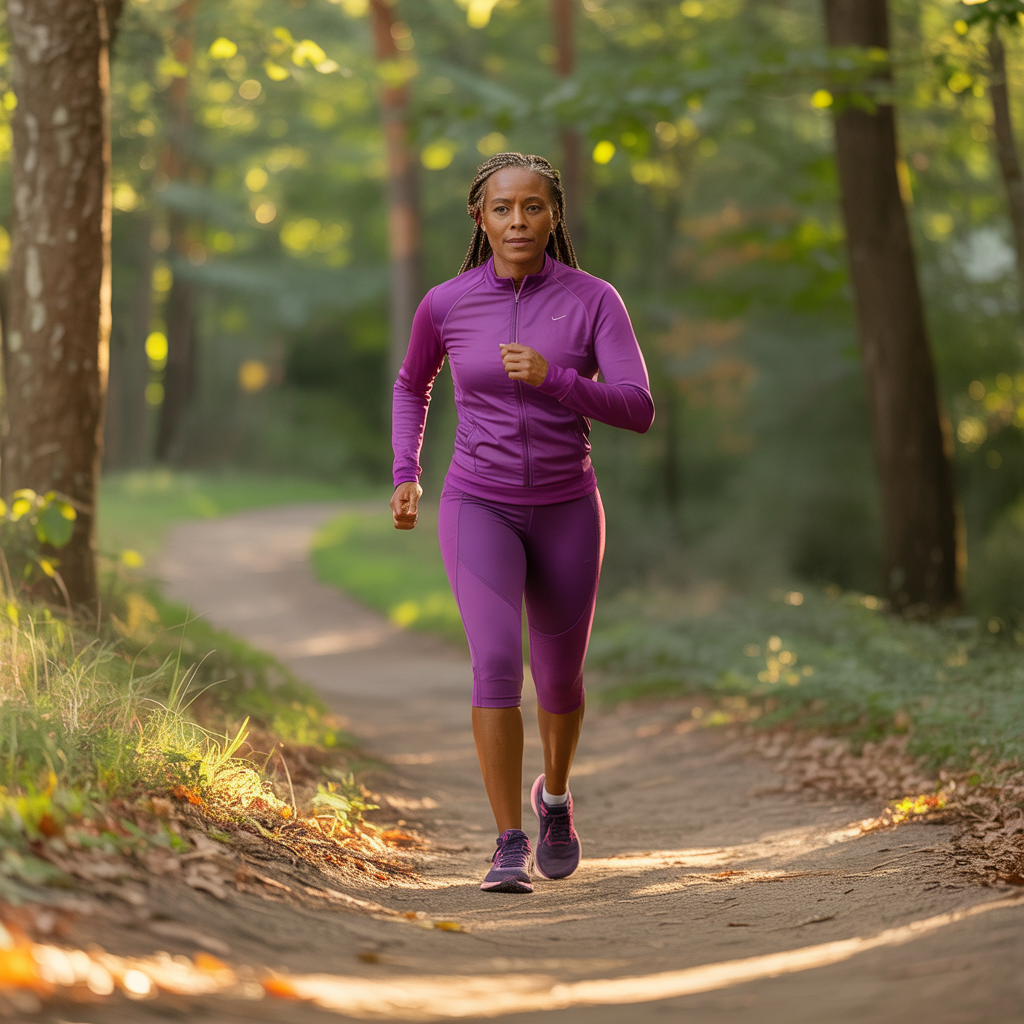
The beauty of walking is its simplicity. You don’t need special equipment, a gym membership, or perfect weather. Start with 15 minutes. Walk around your neighborhood, use a treadmill or a walking pad, or go to a nearby nature trail (like I do). Do what works best for you. The goal isn’t to be an athlete; it’s to be faithful to your body’s need for gentle movement.
But let’s talk about strength training too. I know, I know—some of you just rolled your eyes. But hear me out. Building physical strength builds mental resilience, too. When we lift weights (even if we’re starting with lighter ones!), we’re teaching our bodies and our minds that we can do hard things.
During menopause, we lose muscle mass faster than ever before. Strength training helps us maintain not just our physical capabilities, but our confidence. There’s something empowering about knowing your body is strong and capable, especially when so much else feels uncertain. It brought me confidence I didn’t know was inside me.
You don’t need to become a bodybuilder, but don’t be afraid to challenge yourself either. When I started strength training years ago, I began with light (5lbs), medium (8-10lbs), and heavy (12-15lbs) dumbbells. These days, I lift heavy—deadlifting, squatting, benching, and pressing by following the Starting Strength style (a barbell training program focused on compound movements). The gym I go to allows me to work with a coach who monitors my lifting to ensure I use proper form and technique to prevent injury.
I’d like to encourage you also to start with a light, medium, and heavy set of dumbbells when you begin strength training. Start with two sessions a week and build from there. Your future self will thank you. And I will be cheering you on, sis, every step of the way.
Remember, our bodies are temples—not just places to house our spirits, but gifts to be stewarded well. Moving them with intention and care is an act of worship.
Barefoot and Bold – Finding Peace in God’s Earth
Here’s something that might sound a little unconventional: sometimes, some of the best prayer happens with your feet in the grass or in the sand.
Grounding, also called earthing, is the practice of making direct skin contact with the earth’s surface. And before you dismiss this as too “weird,” know that there’s solid science behind it. The earth has a natural electrical charge, and when we directly connect with it, it can help regulate our nervous system and reduce inflammation in our bodies.

The research shows that grounding can:
- Lower cortisol levels (that stress hormone we talked about in the last blog)
- Improve sleep quality
- Reduce anxiety and promote feelings of calm
- Decrease inflammation throughout the body
Think about it—God created us from the dust of the earth. Is it really so surprising that reconnecting with His creation would bring us peace?
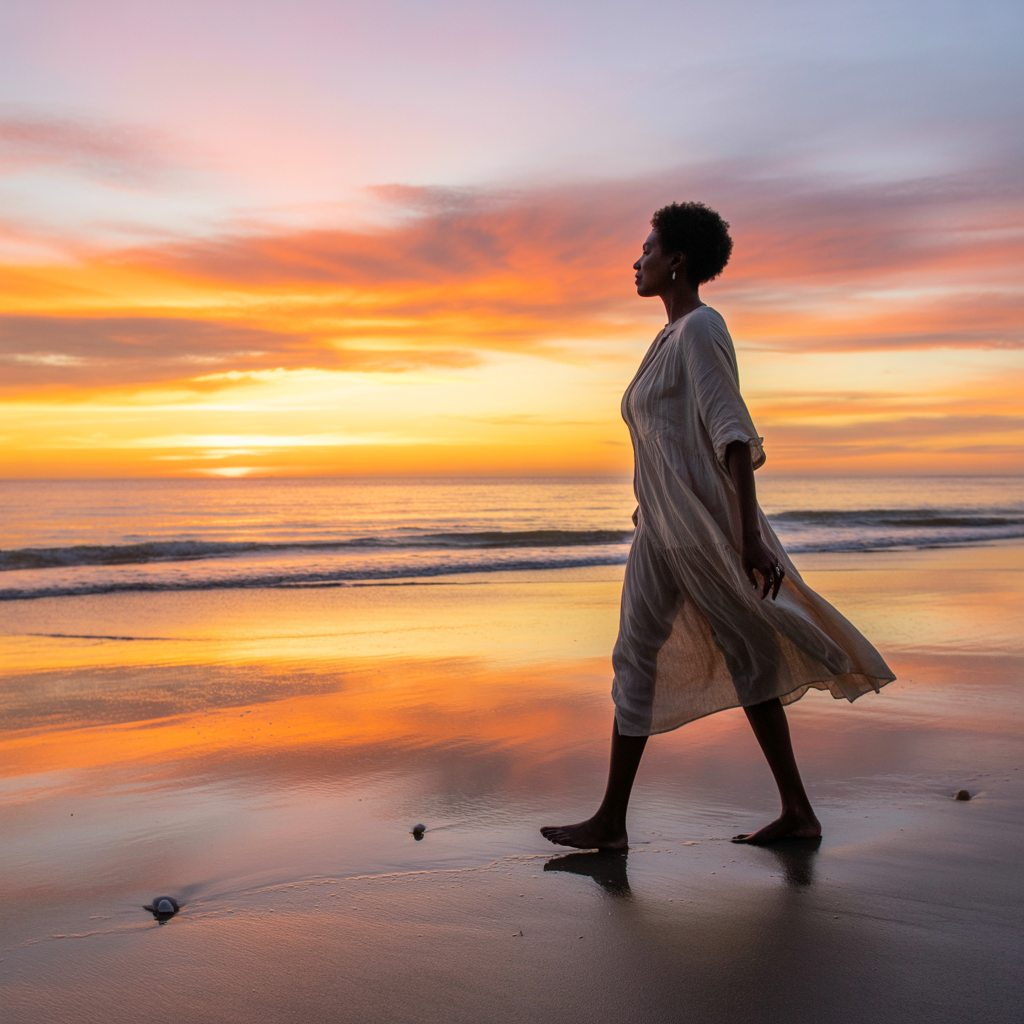
I’ll be honest, I haven’t actually incorporated grounding consistently yet, but I plan to. What’s funny is that I experienced its benefits without even knowing what it was. A few years ago, while on vacation, my husband and I got up early every morning to watch the sunrise (it’s one of my absolute favorite things to do) and walk the beach barefoot for hours as the sun rose higher and higher in the sky. I felt so relaxed and slept so well that entire week. I had no idea at the time that what we were doing was grounding, or how much it was benefiting my nervous system.
Not only that, but studies are showing how beneficial getting sunlight first thing in the morning is for your circadian rhythms and melatonin production. All of that was happening for me during that vacation, no wonder I felt so restored! When I get my beach house in a few years (thinking Panama, Curacao, or Aruba!), I plan to practice this every day. Oh yeah, I dream BIG and BOLDLY.
Here are simple ways to practice grounding:
- Walk barefoot in your yard for 15-20 minutes
- Sit on the grass while you have your morning coffee
- Garden with your bare hands
- Walk barefoot on the beach if you’re blessed to live near one
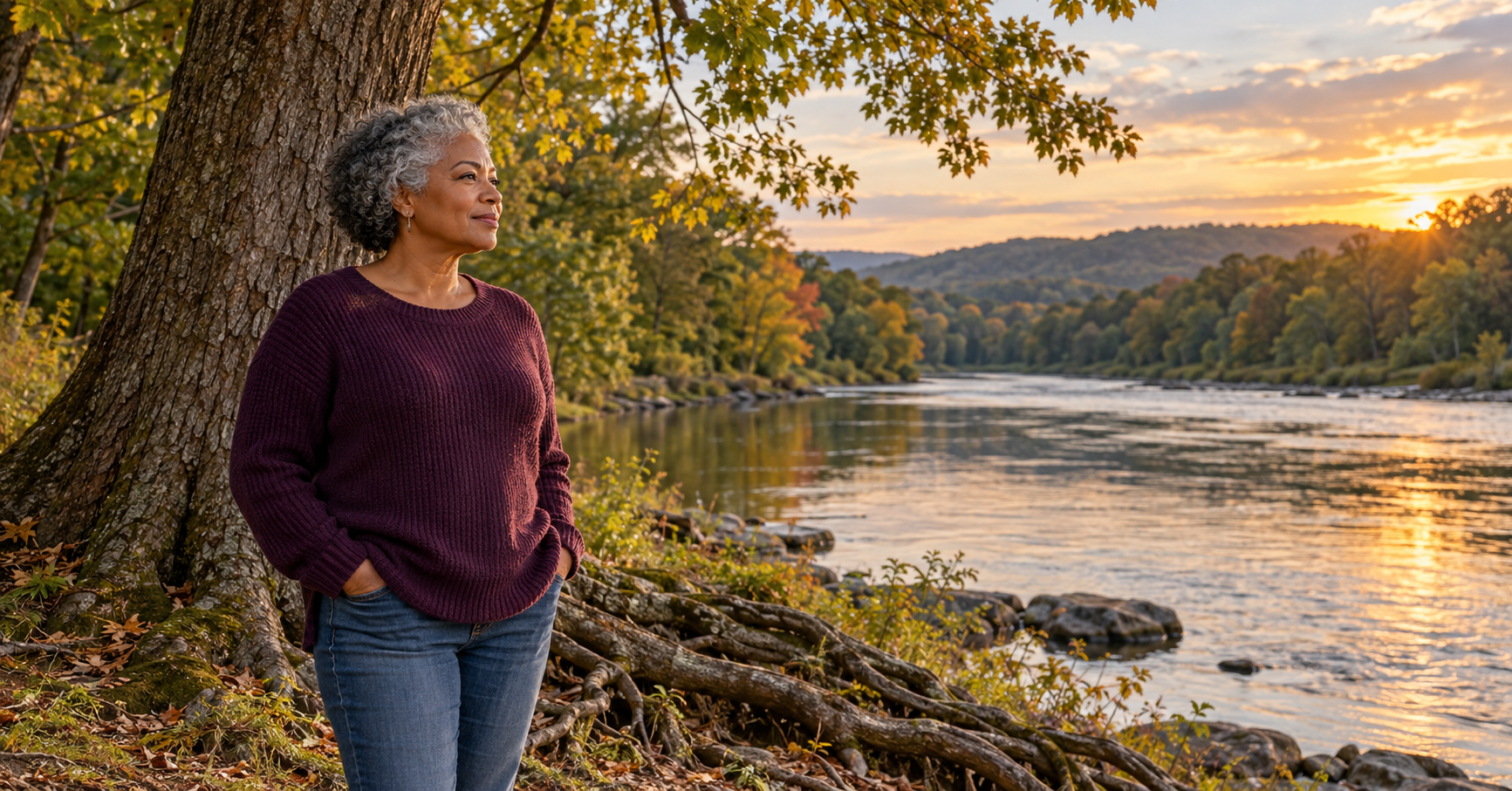
- Even leaning against a tree counts!
I’ve found some of my most meaningful prayer times have happened when I’m connected to God’s creation this way. There’s something about feeling the earth beneath my feet that reminds me I’m held, supported, and deeply loved by the One who created it all.
Rest as Resistance – Honoring God’s Design for Renewal
Let’s talk about the elephant in the room: sleep. If you’re reading this at 4:30 AM because you can’t stay asleep, you’re not alone, sis. Oh, how I miss the sleep I used to get before menopause.
Sleep is my bae! Do you hear me???
Sleep disruption is one of the most frustrating aspects of hormonal changes, but it’s also one of the most important things we can address.
Quality sleep is when your nervous system does its deepest healing work. It’s when your brain clears out toxins, processes emotions, and prepares you for the next day. Without it, everything else—your mood, your energy, your ability to handle stress—suffers.
Here’s the truth about sleep during menopause:
- Hot flashes and night sweats can wake us up repeatedly
- Lower progesterone makes it harder to fall asleep and stay asleep
- Increased anxiety can keep our minds racing when we should be resting
- Changes in melatonin production disrupt our natural sleep cycles
But there are practical steps we can take to work with our changing bodies, not against them.
Sleep hygiene tips that work for midlife women:
- Keep your bedroom cool (65-68°F if possible)—it can help with the hot flashes
- Create a consistent bedtime routine that signals to your body it’s time to wind down
- Limit your screen time for at least an hour before bed (I know, it’s hard!)
- Consider blackout curtains or an eye mask
- Try magnesium supplementation (check with your doctor first)
- Keep a journal by your bed to dump racing thoughts before sleep

Here’s a perspective shift that changed everything for me: rest isn’t lazy. God modeled rest for us in creation. He didn’t rest because He was tired; Our God is a God of order. He rested to show us that order matters. Work and rest, activity and recovery, engagement and restoration are all part of His perfect design.
When we prioritize sleep, we’re not being selfish. We’re honoring the temple God has given us and preparing ourselves to serve Him and others from a place of wholeness, not depletion.
So tonight, as you prepare for rest, remember, even your sleep is a gift from God. It’s a time when He lovingly restores you. Let’s receive it as the blessing it is, and keep moving forward in this journey together.
Processing the Past – When Memories Surface Unexpectedly
Here’s something I wasn’t prepared for during my menopause journey: the memories. Once I went through the transition, so many thoughts and painful memories from the past came up out of nowhere: things I hadn’t thought about in decades. It was like my mind was cleaning house, bringing up old hurts and traumas that intensified the anxiety I was already feeling.
If this is happening to you, please know you’re not alone, and you’re not losing your mind. Hormonal changes affect how our brains process and store memories. When estrogen levels drop, it can impact the areas of our brain responsible for emotional regulation and memory processing.
For me, seeking therapy was crucial. There’s no shame in getting professional help when you need it. But very recently, I’ve leaned into journaling, and it has become my daily lifeline too. There’s something powerful about getting those swirling thoughts out of your head and onto paper.
Here’s how journaling can help during this season:
- It gives those overwhelming thoughts a place to go instead of spinning in your mind
- It helps you process emotions without judgment
- It can reveal patterns and triggers you might not otherwise notice
- It creates space between you and the intensity of difficult memories
- It becomes a record of your healing journey and God’s faithfulness through it

Simple ways to start journaling:
- Keep a notebook by your bed for middle-of-the-night thoughts
- Try “brain dumps”—just write everything you’re thinking for 10 minutes without editing
- Write letters to God about what you’re experiencing-a prayer journal
- Use prompts like “Today I’m grateful for…” or ” a gratitude journal
- Don’t worry about grammar or making it pretty—this is just for you
Remember, God sees every tear, knows every hurt, and walks with you through every memory that surfaces. Psalm 56:8 reminds us that He keeps track of all our sorrows and collects every tear. Nothing you’re experiencing catches Him by surprise.
If you’re dealing with trauma or painful memories, please consider reaching out to a Christian counselor or therapist. You are not weak for needing help, and there’s incredible strength in seeking help.
I believe God often works through skilled professionals to bring healing to our hearts, minds, and bodies.
Whatever memories resurface in this season, remember—God holds every piece of your story, and He delights in bringing beauty and healing out of even the hardest chapters.
What a gift it is to know and be loved by God so intimately!
Your Toolkit for Thriving, Not Just Surviving
The beautiful thing about these practices is how they work together. When you walk regularly, you sleep better. When you sleep better, you handle stress more effectively. When you’re grounded (literally and figuratively), you feel more centered and calm. When you’re calm, you make better choices about movement and rest.
It’s a beautiful, interconnected system—just like God designed it to be.
Here’s how to start building your toolkit:
- Choose ONE practice to focus on this week. Don’t try to do everything at once.
- Start small-ten minutes of walking, five minutes of grounding, or just one improvement to your sleep routine.
- Be consistent rather than perfect. It’s better to walk for 10 minutes every day than to plan an hour walk that you’ll skip.
- Give yourself grace on the hard days (I struggled with this for a long time). Some days, just getting through is enough.
- Find a friend to do this with you. Community makes everything better and more sustainable.
Remember, this isn’t about adding more pressure to your life; it’s about working with your body instead of against it. It’s about recognizing that God has given you everything you need to thrive in this season.
All Praise to the One Who Knows Our Frame
As I was writing this, I kept coming back to Psalm 103:14 AMP: “For He knows our (mortal) frame; He remembers that we are (merely) dust.” God knows exactly what we’re going through. He knows how hard it is when our bodies feel foreign to us, when anxiety keeps hitting us like we’re a punching bag out, and when we can’t sleep through the night.

But He also knows how resilient we are because He created us. He knows the strength He’s built into us, the capacity for healing He’s woven into our very cells, and the community He’s provided to support us through every season.
Your body isn’t broken—it’s changing. And God has equipped you with practical tools to support it through this transition. Movement that heals, connection with His creation that grounds you, and rest that restores you from the inside out.
Your best years aren’t behind you, beautiful. They’re still unfolding, one faithful step at a time.
We can thrive, but we have to be willing to do hard things.
As you consider using some of the resources I shared from God’s toolkit this week, I invite you to pick just ONE tool from it and commit to it for a few days—whether it’s walking, grounding, better sleep, or journaling. Start there. Be faithful to your body’s need for care. Be brave enough to prioritize your health. Be kind enough to share what you learn with another woman who needs to hear it.
Also, no matter which tool you choose, set aside a few minutes each day to journal about your experience. Write down what changes you notice in your body, mind, or spirit. What practice brought you peace? What did you find challenging?
If you discover something meaningful in your journaling, I’d love for you to share a snippet—or simply let me know in the comments what God is showing you on this journey. Your story might be the encouragement another woman needs!
We’re in this together, walking boldly through every season of life God has for us.
Life is a faith journey. Walk boldly—even through menopause.
Be brave enough to pursue your dreams. Be faithful enough to trust the process. Be kind enough to help another woman along the way.
More Help for Your Journey
I want to introduce you to three incredible experts who are passionate about empowering women to thrive through menopause and beyond: Dr. Stacy Sims, Dr. Gabrielle Lyon, and Dr. Vonda Wright. These women are highly passionate about wanting women to thrive for the rest of their lives, not let things go when things get harder during the menopause transition.
They speak extensively about bone health, which becomes critically important for us during and after menopause. Dr. Vonda Wright, an orthopedic surgeon, talks candidly about what happens to post-menopausal women who don’t prioritize strength training as we age.
They all have incredible resources, podcasts, and books that provide evidence-based guidance for our changing bodies. I highly recommend following them on social media and listening to their insights as guests on podcasts. Sometimes it helps to hear different voices speaking truth into the changes we’re experiencing. Their practical strategies work, and they bring us multiple perspectives on how to thrive through this season of life.
I’ll be sharing more about what each of these experts teaches in future blogs, so stay tuned!