
“If possible, as far as it depends on you, live at peace with everyone.” — Romans 12:18 (AMP)

Before We Begin
If you’ve been reading along, you already know the past few weeks have been heavy. I lost my grandmother in March. I traveled to South Carolina to lay her to rest. And I came home carrying grief, exhaustion, and an unexpected moment that added another layer of emotional weight I wasn’t prepared for.
I briefly mentioned that moment in Blog #51, but some experiences are too important to leave sitting quietly in the background.
So today, I want to talk about it fully.
What Happened
After my grandmother’s funeral, back at my mother’s house, my cousin, who has always been more like an uncle to me, pulled me aside. He was hurting. His wife had passed away just a few months earlier after a long illness, and I did not attend her funeral. He felt I should have been there. And he told me so.
He was grieving. And I believed his feelings were valid.
So I looked at him and said, “You’re right. I’m sorry.”
I felt he deserved an honest apology without excuses or explanations for why I didn’t attend.

What I didn’t say was that I had stayed behind to care for my grandmother while my mother traveled to South Carolina for the funeral. I visited Granny every day at the nursing home because I didn’t want her to feel alone. I also wanted my mother to have peace of mind while she was away paying her respects.
My grandmother actually wanted me to go. But I told her I didn’t want to leave her. My mind was made up.
And if I had to make that choice all over again, I would make the exact same one without hesitation.
But in that moment — his grief, his hurt — it was not the time for my defense. So I held my truth quietly and honored his pain instead.
He told me he forgave me.
And I believed him.
The Message
A few days later, he sent me a message through my mother.
It was: “Do better.”
He said this after I believed we had already resolved the issue between us.
I felt everything at once — anger, hurt, and completely blindsided. I had seen his pain clearly and chose to honor his grief instead of defending myself. I had apologized fully, and I meant every word sincerely.
And apparently, that still wasn’t enough.
That message, sent through my mother, felt like an attempt to shame me — to make me feel small after I had already taken accountability.
To say I didn’t like it would be an understatement.
I have a deep issue with people trying to shame others, whether it comes wrapped in scripture, disguised as a joke, delivered after a matter has supposedly been resolved, or passed indirectly through someone else entirely.
Attempting to shame someone is not a tool of correction. It is a tool of control.
And it has no place in a relationship that claims to have moved toward forgiveness.
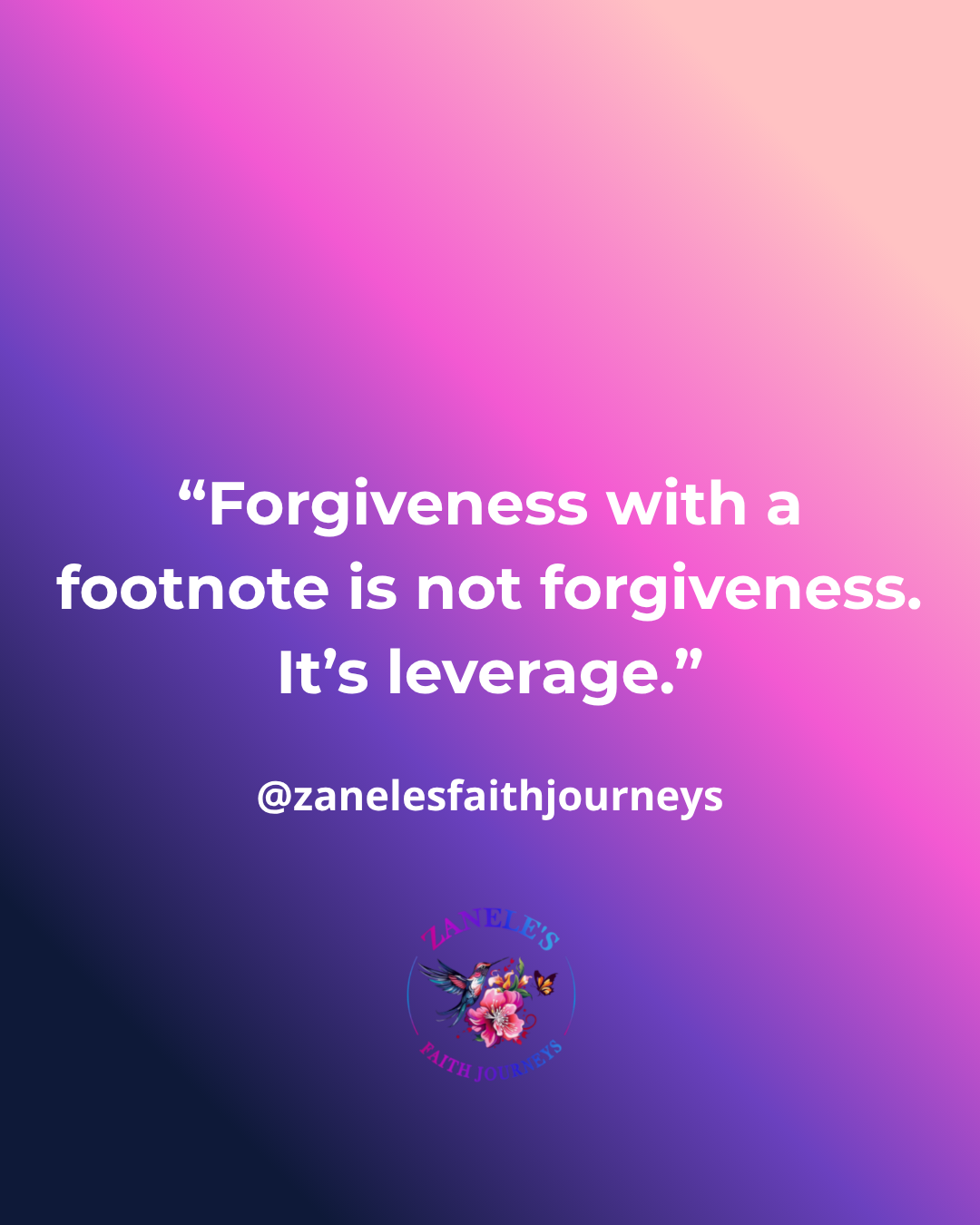
Because forgiveness with a footnote is not forgiveness.
It’s leverage.
Emotional Exhaustion Is Real
I want to pause here and name something that doesn’t get talked about enough.
We talk a lot about physical exhaustion — the kind that comes from overwork, caregiving, burnout, and lack of rest. But emotional exhaustion is its own kind of exhaustion entirely. And it can be just as draining.
Emotional exhaustion happens when you absorb other people’s pain, navigate other people’s grief, extend grace under pressure, and still walk away carrying the weight of a moment that went sideways despite your best efforts.
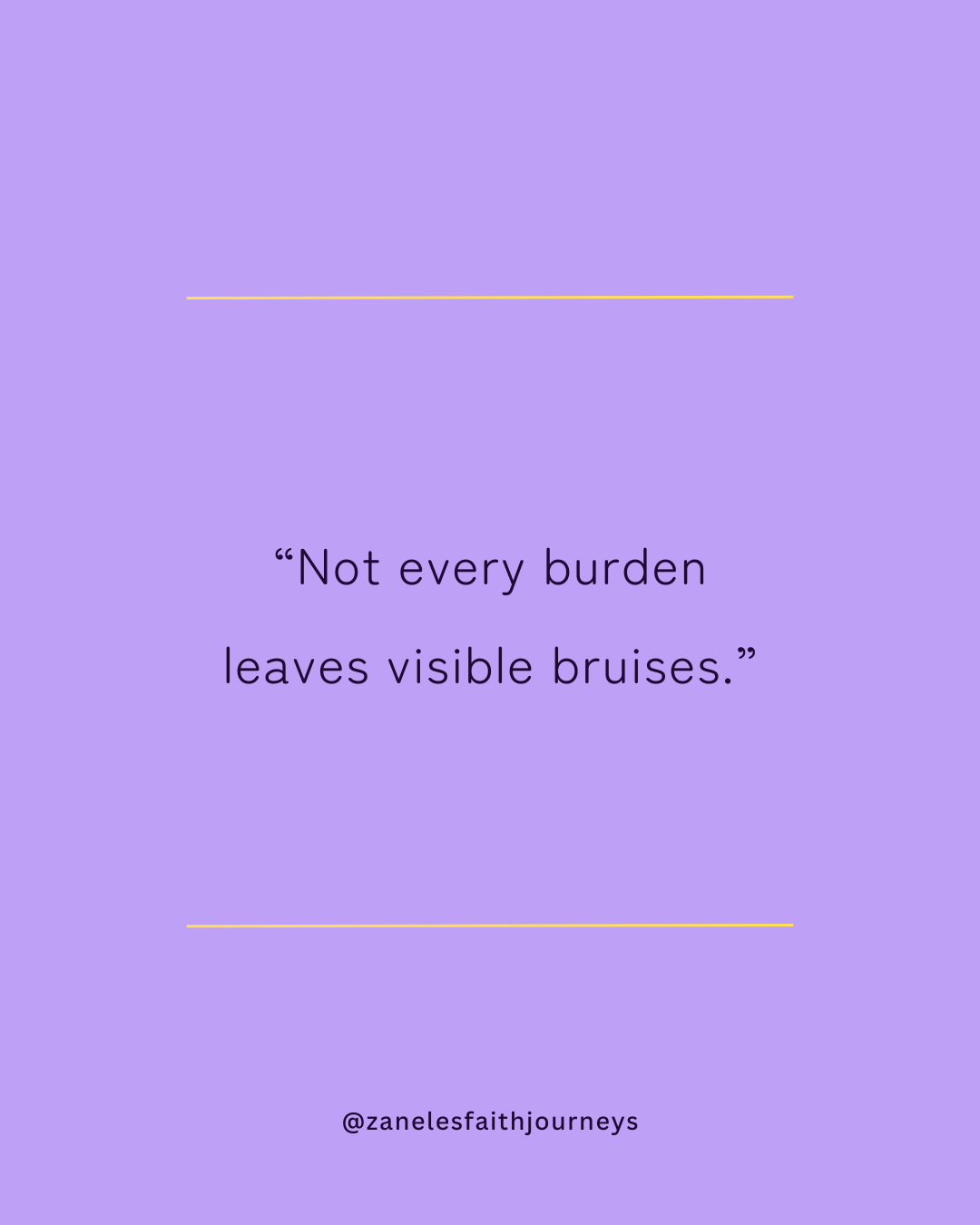
It doesn’t show up on a lab result. Nobody can see it from the outside. But it settles into your body all the same.
I was already grieving. I was already tired. And that “do better” message added an emotional weight I wasn’t prepared to carry.
For the woman reading this who knows exactly what I’m talking about — I see you.
The invisible weight is real.
And you are not weak for feeling it.
Forgiveness, Reconciliation, and What Comes After
In case you didn’t know, the messy middle is often nuanced territory, so I want to be careful here.
Forgiveness and reconciliation are not the same thing.
Forgiveness is something you do for yourself. It releases you from the burden of carrying an offense. It is both an act of faith and an act of self-preservation. It does not require the other person to deserve it, acknowledge it, or even know it happened.
Reconciliation is a separate decision entirely.
Sometimes it happens. Sometimes it doesn’t. And even when it does, the relationship may not look the way it once did. That is not failure. Sometimes, a redefined relationship is the healthiest option for everyone involved.
Think about it this way: two people can choose to end one chapter of a relationship, genuinely forgive each other, and still find a way to coexist with grace. The relationship may change. The dynamic may shift. But forgiveness creates space for whatever comes next, even if it looks different from what existed before.
What forgiveness does not have to mean is unlimited access.
It does not mean absorbing repeated harm with a smile. And it absolutely does not mean pretending the wound never happened or accepting shame as a substitute for another person’s accountability.
You can forgive someone fully and still be cautious.
You can wish someone well and still protect your peace.
Both things are true.
Both things are allowed.
The Mother’s Day Moment
I didn’t expect to see him so soon.
And I didn’t expect what it would bring up in me.
This past Sunday was Mother’s Day. I went to my mother’s house to bring her dinner, and unexpectedly, my cousin was there visiting from out of town.
And I want to be honest with you about what happened inside me in that moment.
I was genuinely happy to see him.
I wasn’t pretending to be happy or managing my emotions for the sake of the room. I was genuinely happy to see him.
Because the forgiveness I had extended quietly, privately, in my own heart, was real. It had done its work. And I felt the freedom of that in a way I didn’t fully expect.
When I think about it now, I am both amazed and humbled by the work of the Holy Spirit in my life.

But I also want to be honest about this: the “do better” moment was still in the back of my mind.
Forgiveness does not erase memory. And it does not instantly dissolve the caution that sometimes follows a wound.
I am cautiously optimistic about where things go from here. And that cautiousness is an honest — though unfortunate — consequence of what happened.
I am not angry.
I am not bitter.
But I am paying attention—not just here, but in all my relationships.
I’m realizing how tired I am of pretending or putting on masks just to make things easier.
I want to show up as my true self moving forward — fully, honestly, and without shrinking myself to keep the peace.
And that is okay.
What I’m Carrying Forward
Here is what I know to be true:
I did the right thing at that funeral. I honored his grief at the expense of my own defense. I apologized cleanly and without conditions. And I have forgiven him for the message that followed — not because it was deserved, but because I refuse to carry it.

Forgiveness is mine to give. What he does with it is his.
And if you are reading this carrying a relationship wound — if someone shamed you after you did the right thing, if forgiveness was used as leverage instead of offered as grace, if you find yourself somewhere between reconciliation and caution and you don’t quite know what to call it — I want you to know this:
You are not wrong for feeling what you feel.
You are not weak for being hurt.
And you are not failing at forgiveness just because the relationship looks different on the other side.
“As far as it depends on you” — that’s your assignment. The rest belongs to God.
Life is a faith journey. Walk boldly — even when the path runs straight through a relationship wound.
Be brave enough to apologize when it’s right, even when you could have defended yourself instead.💜
Be faithful enough to forgive — not for their sake, but for your freedom.💜
Be kind enough to give yourself grace for the caution that follows a wound. It doesn’t mean you haven’t forgiven. It means you’re human. 💜
My friend, forgiveness is yours to give. And the peace that follows — that belongs to you too.
— Tami Zanele 💜
💜 Journal Questions
- Have I ever stayed silent about my own hurt in order to honor someone else’s emotions—and how did that impact me?
- What is God teaching me about boundaries, wisdom, and peace in this season of my life?
If you’re walking through your own season of learning, forgiveness, or boundary-setting, I encourage you to hold onto what spoke to you here and carry it with you into your week.
This is a faith journey. And sometimes the next step is simply reflection.